
First 3D-printed slope stair installed in the Tiel-Waardenburg dike reinforcement project
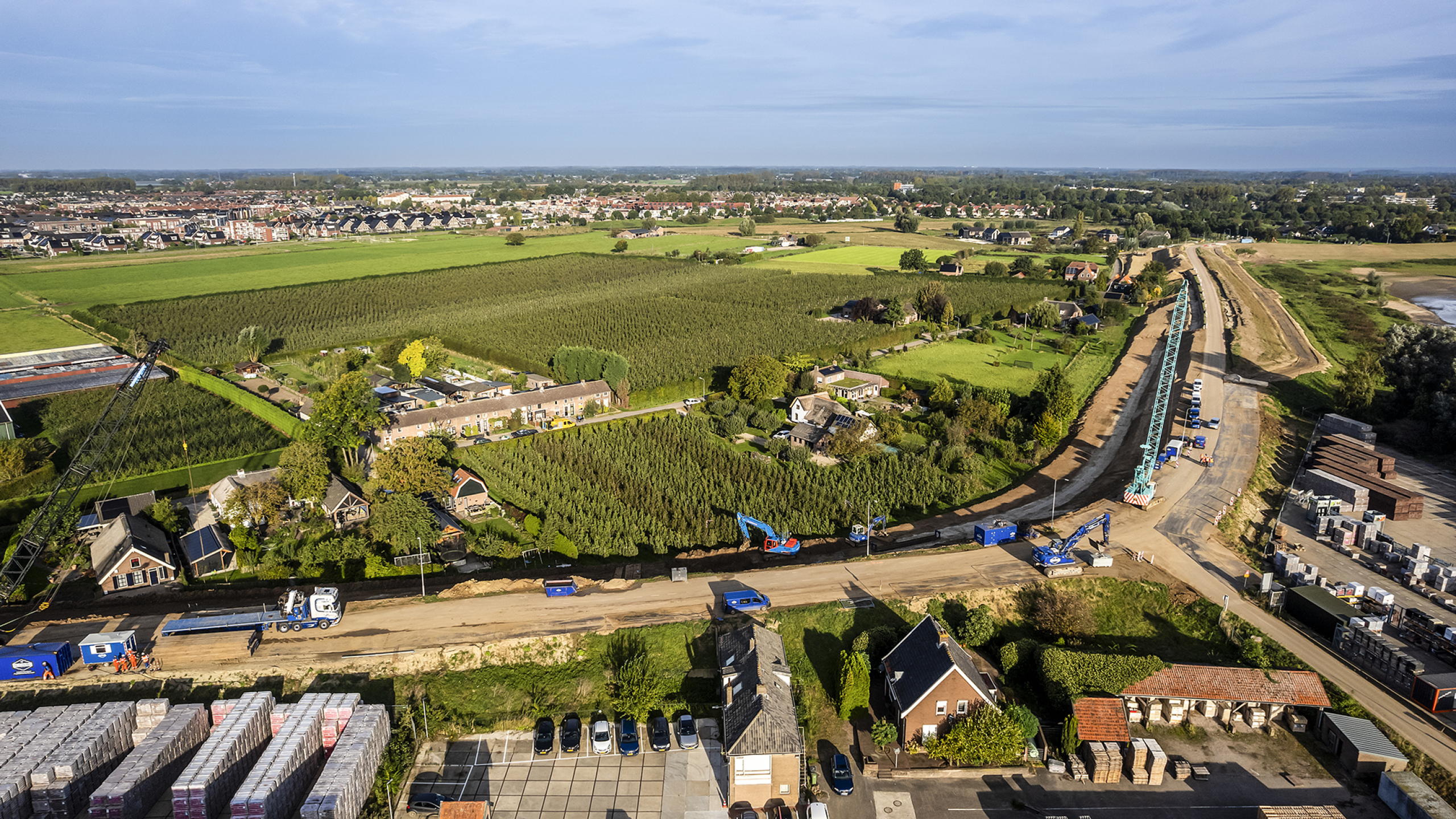
Along the river Waal, one of the larger dike reinforcement projects in the Netherlands is currently underway: Mekante Diek, the stretch between Tiel and Waardenburg. As part of this project, Neolithic is producing a series of 3D-printed slope stairs that provide access across the slopes of the newly reinforced dike.
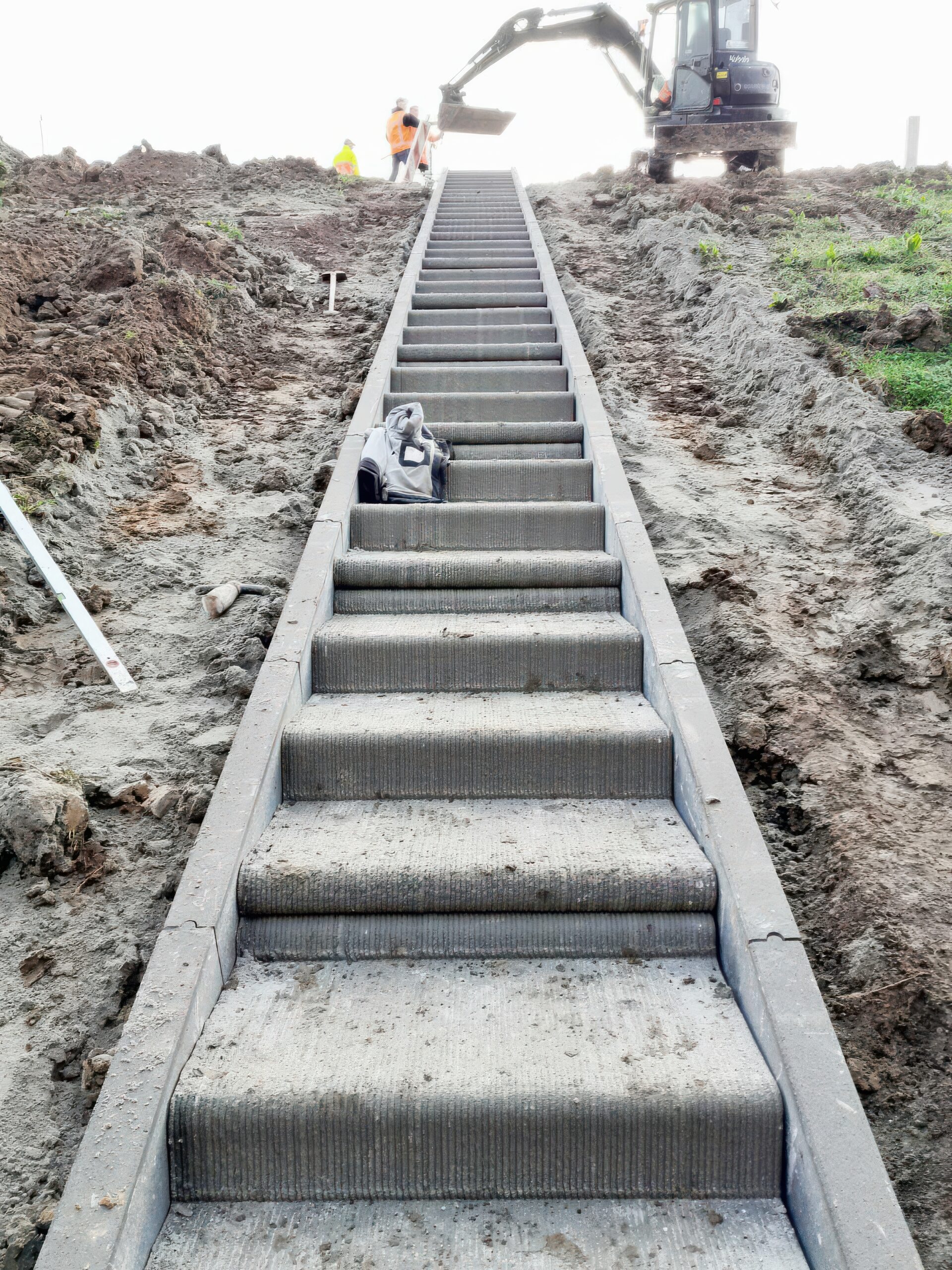
The first stair has now been successfully installed, marking an important milestone in a project that is still in full progress. In the coming months, additional stairs will be produced and installed along the dike.
A complex dike reinforcement along the Waal
The Mekante Diek project is part of the national High Water Protection Programme (HWBP) and is commissioned by Waterschap Rivierenland. The works are carried out by the contractor consortium Mekante Diek, a collaboration between Dura Vermeer, Van Oord and Ploegam.
Over a length of nearly twenty kilometres, the Waal dike is being reinforced to meet the latest flood protection standards. The dike runs through an area with villages, nature reserves and historic landscapes. As a result, almost every section of the project requires site-specific solutions.
In addition to strengthening the dike itself, the project also focuses on accessibility, landscape integration and safe use by residents, visitors and maintenance teams.
Slope stairs for safe access
Slope stairs are essential elements along dikes. They allow safe movement between the outer and inner slopes of the dike, for example for inspection, maintenance and recreational use.
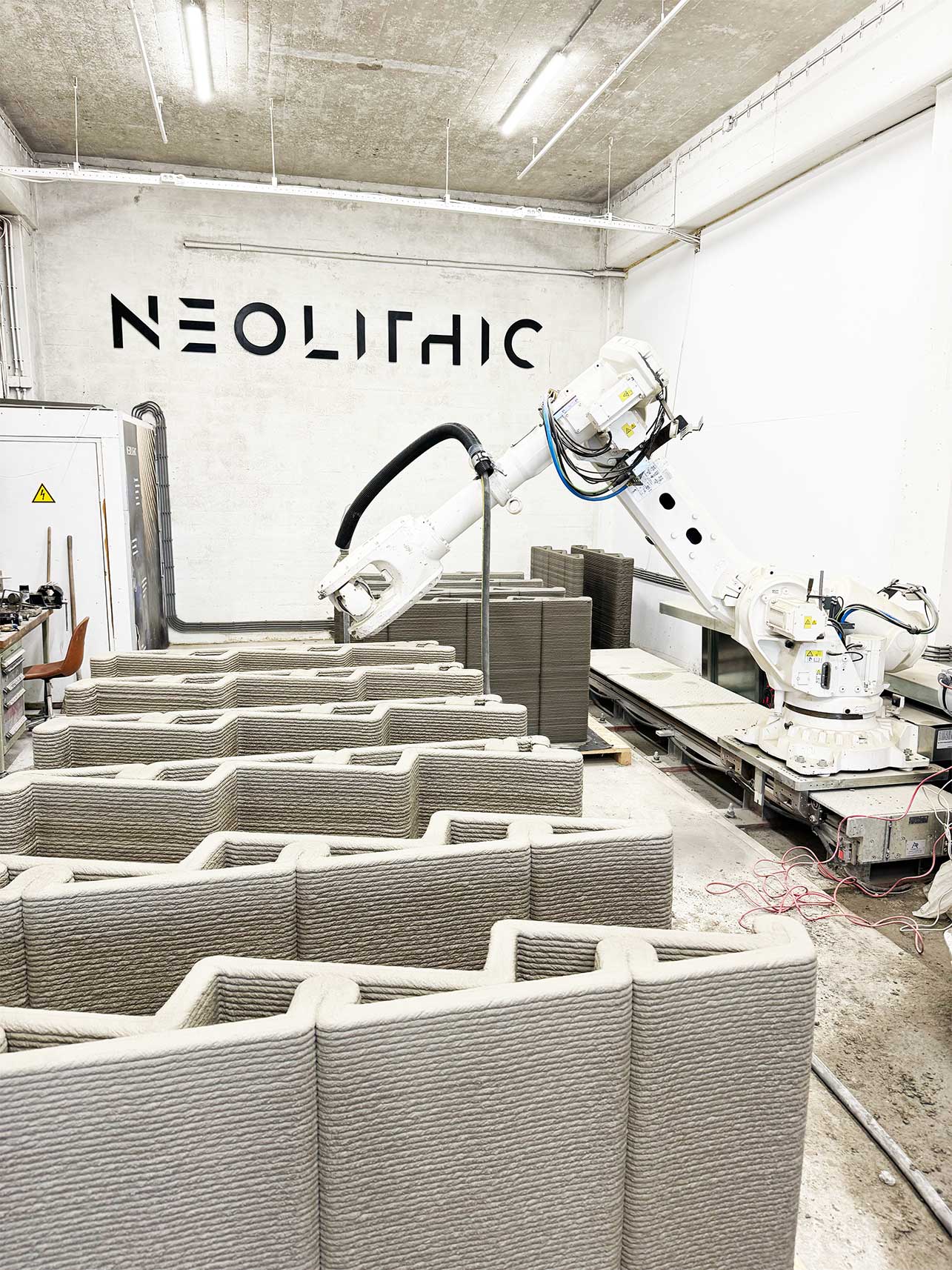
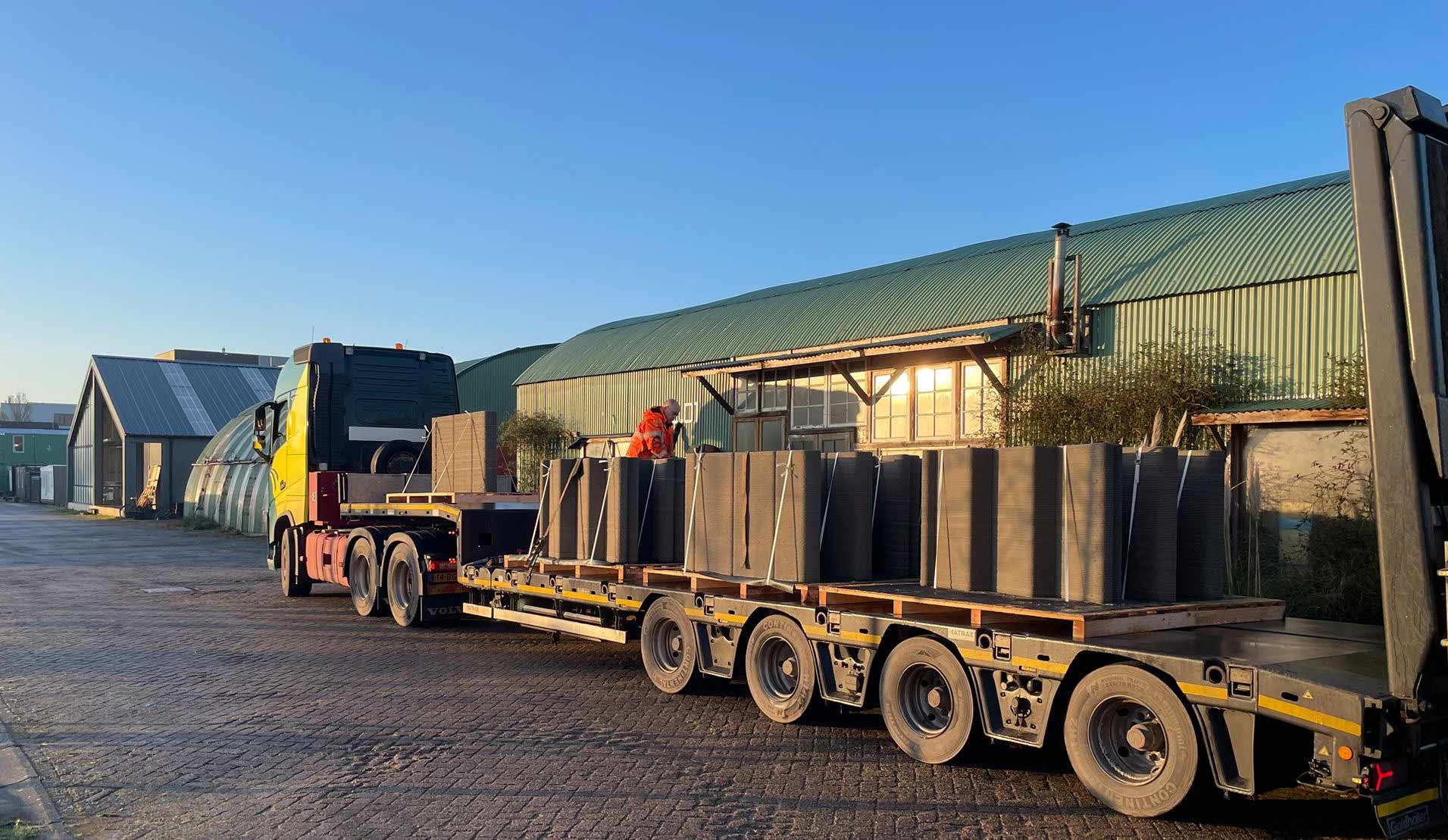
For Mekante Diek, Neolithic is producing a series of slope stairs specifically designed for the different locations along the dike. The stairs are prefabricated in Neolithic’s robotic production facility and then installed on site.
The first installed stair already demonstrates how the elements can integrate naturally into the dike landscape. In the coming period, several additional stairs will be produced and placed along the project trajectory.
Robotic 3D printing for prefab infrastructure
The slope stairs are produced using robotic concrete 3D printing technology. This production method allows Neolithic to manufacture prefabricated infrastructure elements efficiently while maintaining a high level of design flexibility.
For infrastructure projects this offers several advantages:
-
customized solutions without high additional costs
-
a fully digital design-to-production workflow
-
efficient prefab manufacturing
By directly linking digital design models to robotic production, Neolithic can efficiently manufacture elements and adapt them to the specific geometry of each location.
More sustainable through intelligent material use
Sustainability is another important aspect of the project. With 3D printing technology, material can be placed exactly where it is structurally required, reducing unnecessary material use.
This results in lower material consumption and less waste compared to conventional construction methods. In many cases the amount of traditional reinforcement can also be reduced or optimized.
Through this combination of efficient geometry, optimized material use and digital production, the slope stairs achieve a lower Environmental Cost Indicator (MKI) compared to conventional prefab solutions.
For large infrastructure projects such as dike reinforcement programmes, this contributes to the sustainability ambitions of both contractors and public authorities.
To be continued
The installation of the first slope stair marks the beginning of a series of prefab elements that Neolithic will deliver for this project. Over the coming period, additional stairs will be produced and installed along the Mekante Diek dike.
Neolithic will continue to follow the progress of the project and share further updates as the work advances.