
First 3D-printed slope stair installed in the Mekante Diek dike reinforcement project
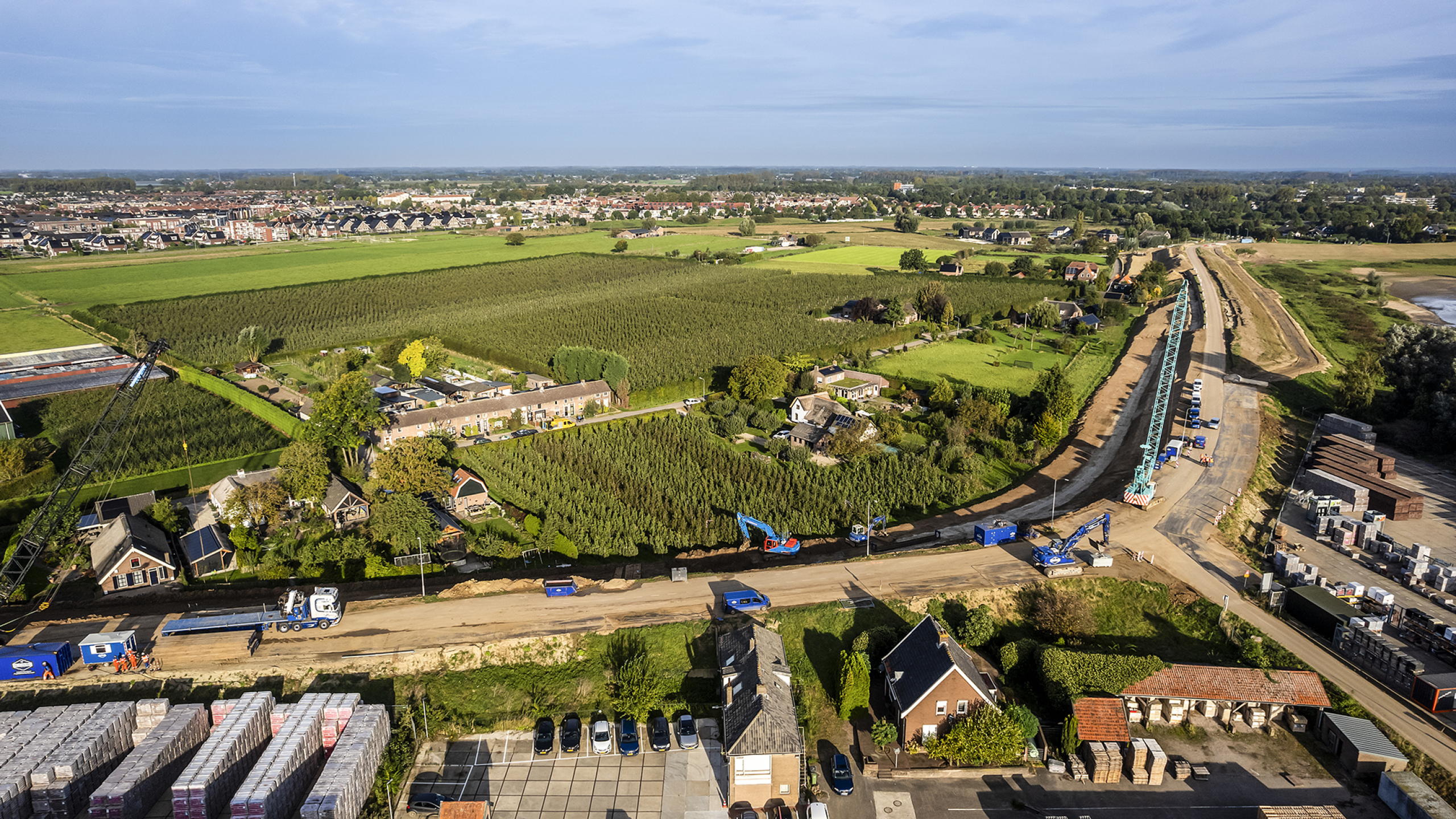
Along the river Waal, one of the larger dike reinforcement projects in the Netherlands is currently underway: Mekante Diek, the stretch between Tiel and Waardenburg. As part of this project, Neolithic is producing a series of 3D-printed slope stairs that provide access across the slopes of the newly reinforced dike.
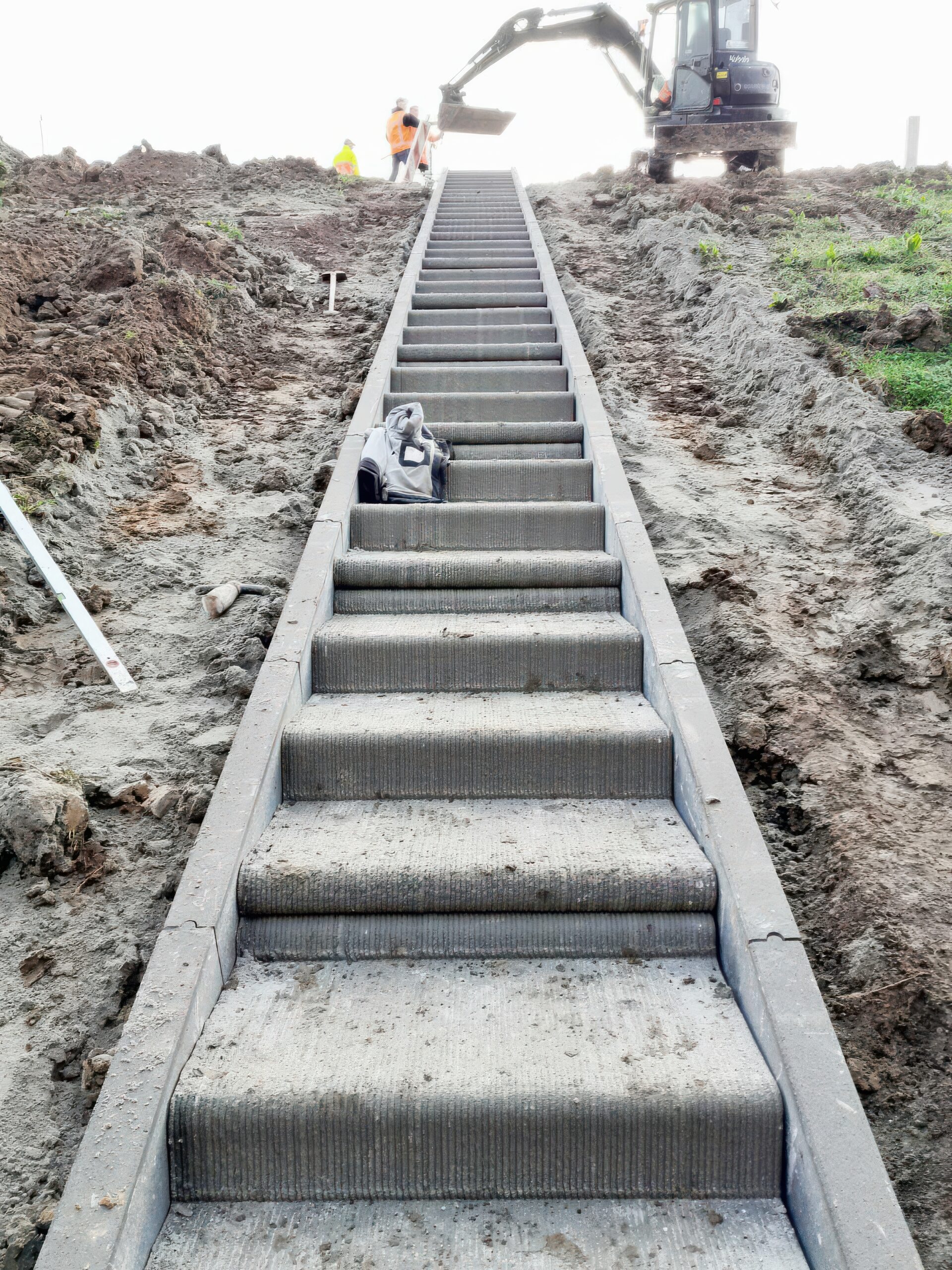
The first stair has now been successfully installed, marking an important milestone in a project that is still in full progress. In the coming months, additional stairs will be produced and installed along the dike.
A complex dike reinforcement along the Waal
The Mekante Diek project is part of the national High Water Protection Programme (HWBP) and is commissioned by Waterschap Rivierenland. The works are carried out by the contractor consortium Mekante Diek, a collaboration between Dura Vermeer, Van Oord and Ploegam.
Over a length of nearly twenty kilometres, the Waal dike is being reinforced to meet the latest flood protection standards. The dike runs through an area with villages, nature reserves and historic landscapes. As a result, almost every section of the project requires site-specific solutions.
In addition to strengthening the dike itself, the project also focuses on accessibility, landscape integration and safe use by residents, visitors and maintenance teams.
Slope stairs for safe access
Slope stairs are essential elements along dikes. They allow safe movement between the outer and inner slopes of the dike, for example for inspection, maintenance and recreational use.
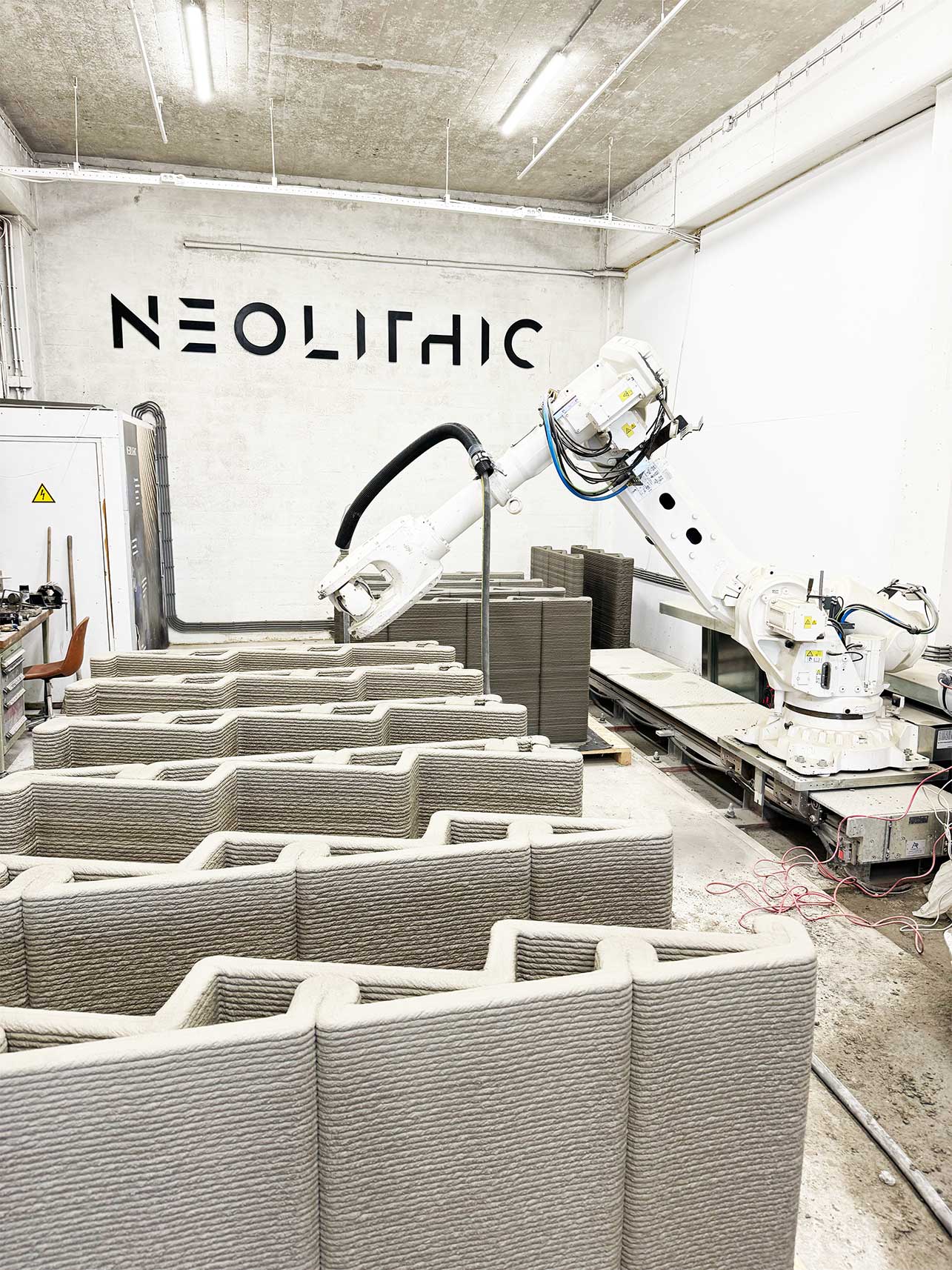
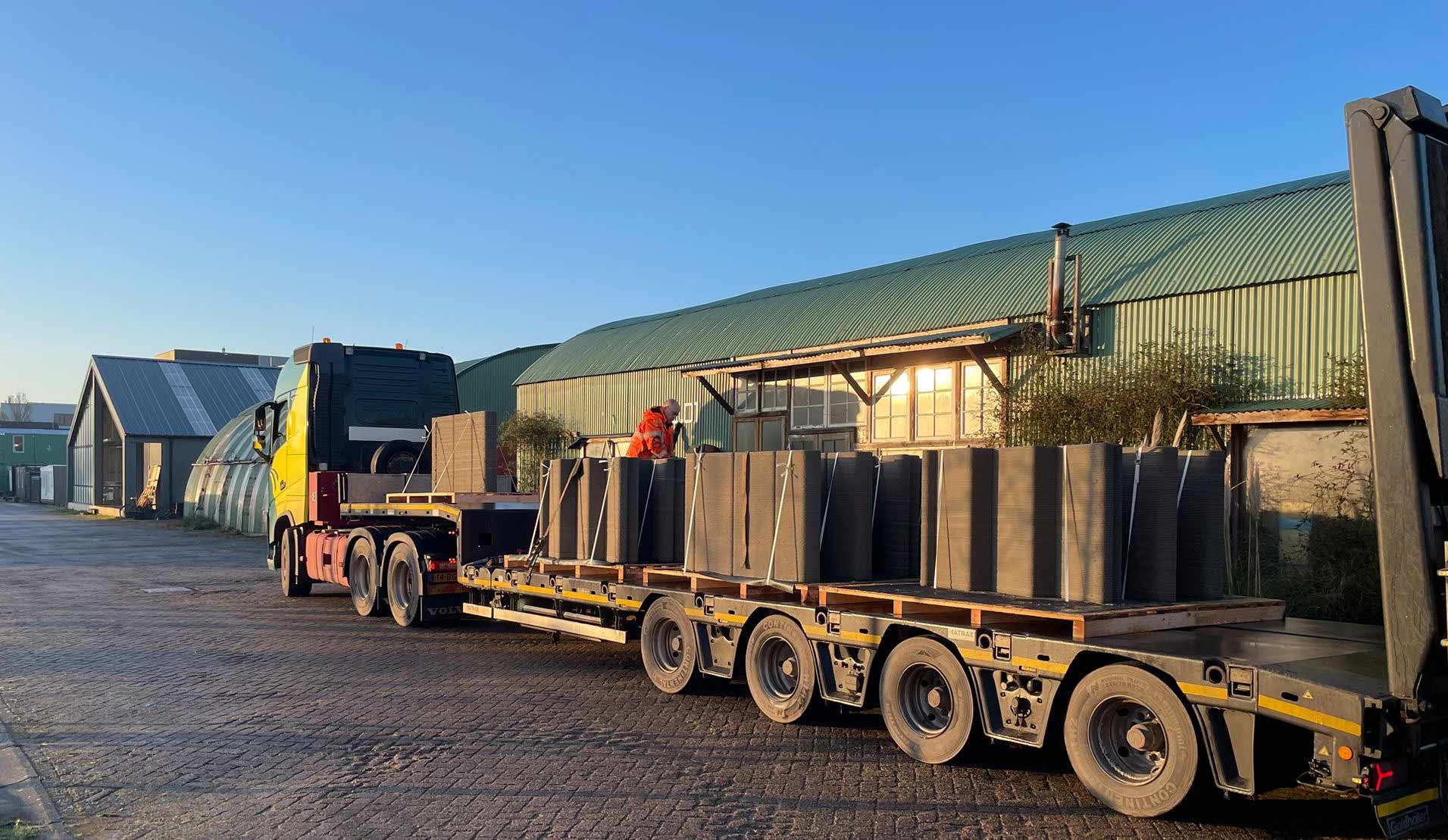
For Mekante Diek, Neolithic is producing a series of slope stairs specifically designed for the different locations along the dike. The stairs are prefabricated in Neolithic’s robotic production facility and then installed on site.
The first installed stair already demonstrates how the elements can integrate naturally into the dike landscape. In the coming period, several additional stairs will be produced and placed along the project trajectory.
Robotic 3D printing for prefab infrastructure
The slope stairs are produced using robotic concrete 3D printing technology. This production method allows Neolithic to manufacture prefabricated infrastructure elements efficiently while maintaining a high level of design flexibility.
For infrastructure projects this offers several advantages:
-
customized solutions without high additional costs
-
a fully digital design-to-production workflow
-
efficient prefab manufacturing
By directly linking digital design models to robotic production, Neolithic can efficiently manufacture elements and adapt them to the specific geometry of each location.
Duurzamer door slim materiaalgebruik
Naast flexibiliteit en maatwerk speelt duurzaamheid een belangrijke rol. Dankzij de 3D-printtechnologie kan het materiaal precies daar worden geplaatst waar het constructief nodig is. Dit resulteert in een efficiënter materiaalgebruik en minder verspilling.
Daarnaast kan in veel gevallen het gebruik van traditionele wapening worden beperkt of geoptimaliseerd. Door deze combinatie van slim ontwerp en digitale productie ontstaat een constructie met een gunstigere MKI-waarde (MilieuKostenIndicator) ten opzichte van traditionele prefab oplossingen.
Voor grote infrastructuurprojecten zoals dijkversterkingen kan dit een belangrijke bijdrage leveren aan de duurzaamheidsdoelstellingen van opdrachtgevers en aannemers.
Wordt vervolgd
De plaatsing van de eerste hellingtrap markeert het begin van een reeks prefab elementen die Neolithic voor dit project produceert. In de komende periode zullen meer trappen worden geproduceerd en geplaatst langs het Mekante Diek traject.
Neolithic zal de voortgang van het project blijven volgen en hierover later meer updates delen.